Soybeans or Corn: Which Should You Plant First?
Rethinking tradition with today’s agronomy, economics, and risk management insights.
For decades, the golden rule in the industry was simple: plant corn first, then soybeans. This strategy was driven by the need to accumulate enough Crop Heat Units (CHU) for corn to reach physiological maturity before September or October frosts. However, with the significant increase in soybean acreage over the past 25 years, does planting corn first still make sense?
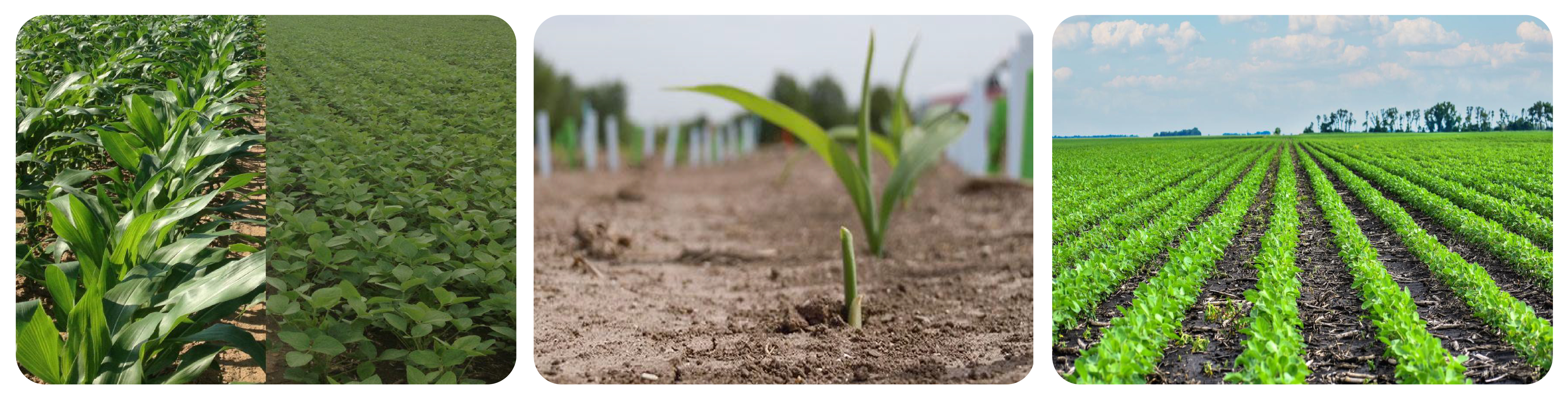
In Ontario and Quebec, the traditional answer has always been to prioritize corn. However, recent research is increasingly supporting simultaneous planting—or in some cases, planting soybeans first. The question is no longer just “which crop should be planted first?” but rather, “which crop suffers the greatest loss if planting is delayed?” Let’s break down the agronomic factors to help guide your decision based on your operation.
Managing Climate Risks
Planting Conditions Matter More Than Calendar Dates
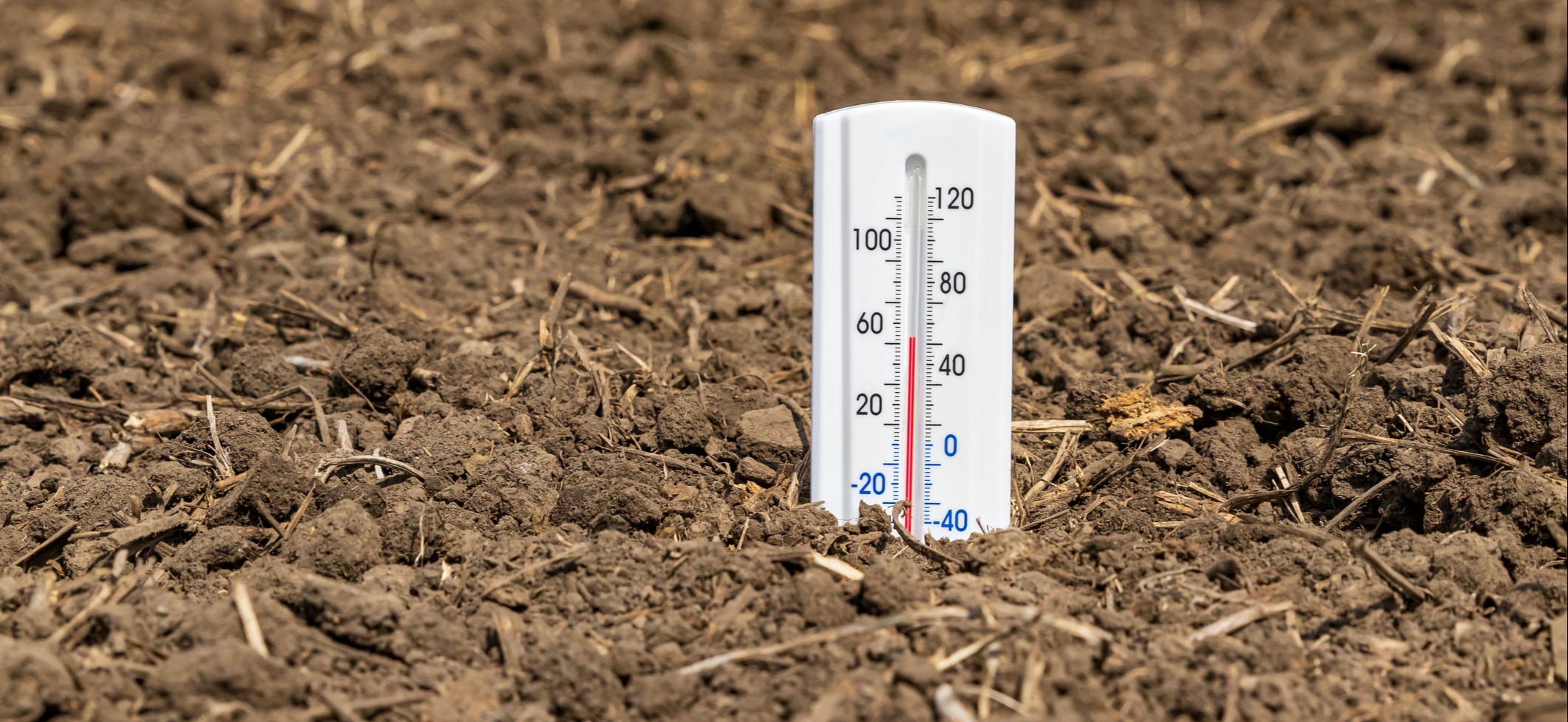
Soil temperature is critical for successful germination. Ideally, soil temperatures should be at least 10°C for corn and 12°C for soybeans, measured at 10:00 AM at a depth of 5 to 10 cm. Be cautious with sandy or muck soils, as their temperatures fluctuate more than clay soils.
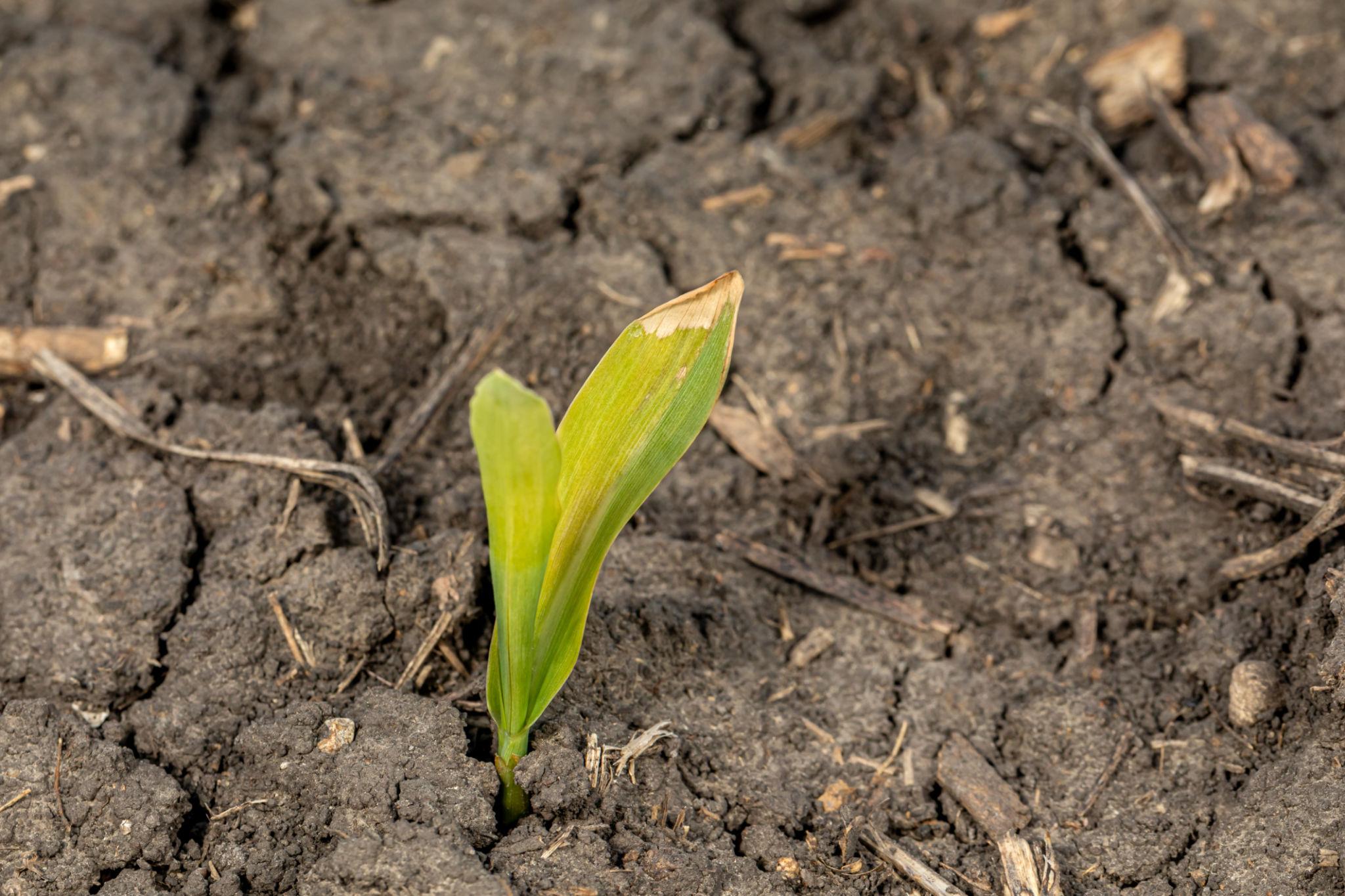
Planting corn too early in cold soils poses a significant risk. If the first water the seed absorbs is very cold, it can rupture cell membranes, leading to uneven emergence or “corkscrewed” seedlings.
It is also important to avoid planting if cold rain or temperatures below 10°C are expected within 24 to 48 hours, as this can cause irreversible imbibitional chilling injury. Soybeans are generally less sensitive than corn during this initial stage.
Spring frost is another major concern. In corn, the growing point remains below the soil surface until the V6 stage (six leaves), offering some protection. Even if frost damages the leaves, the plant can often recover—though not without some yield impact.
Soybeans, on the other hand, have their growing point emerge above the soil shortly after emergence. A severe frost can kill the plant entirely. However, soybeans can tolerate slightly colder air temperatures than corn.
Soybeans, on the other hand, have their growing point emerge above the soil shortly after emergence. A severe frost can kill the plant entirely. However, soybeans can tolerate slightly colder air temperatures than corn.
Soybean Physiology: The Photoperiod Engine
Soybeans Run on Day Length - Not Just Heat
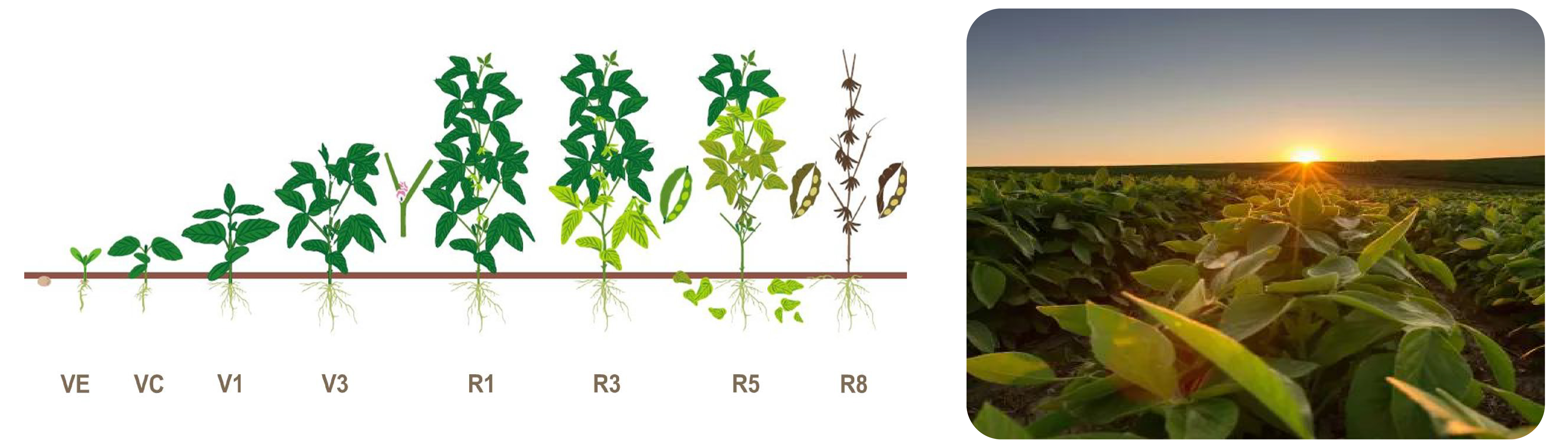
Unlike corn, which is mainly driven by heat accumulation (CHU), soybeans are sensitive to photoperiod (day length). As soon as the seed germinates, a biological clock starts ticking. By starting its growth in early May, the soybean plant increases the number of nodes on its main stem before the flowering signal is triggered by shortening days after June 21st. Every extra node is a potential pod factory. Delaying soybean planting to May 20th, compared to May 5th, can result in a 15% to 20% reduction in the number of nodes. Note that soybeans are better at handling slightly uneven emergence thanks to their extraordinary ability to compensate later in the season.
Corn: The Need for Uniformity
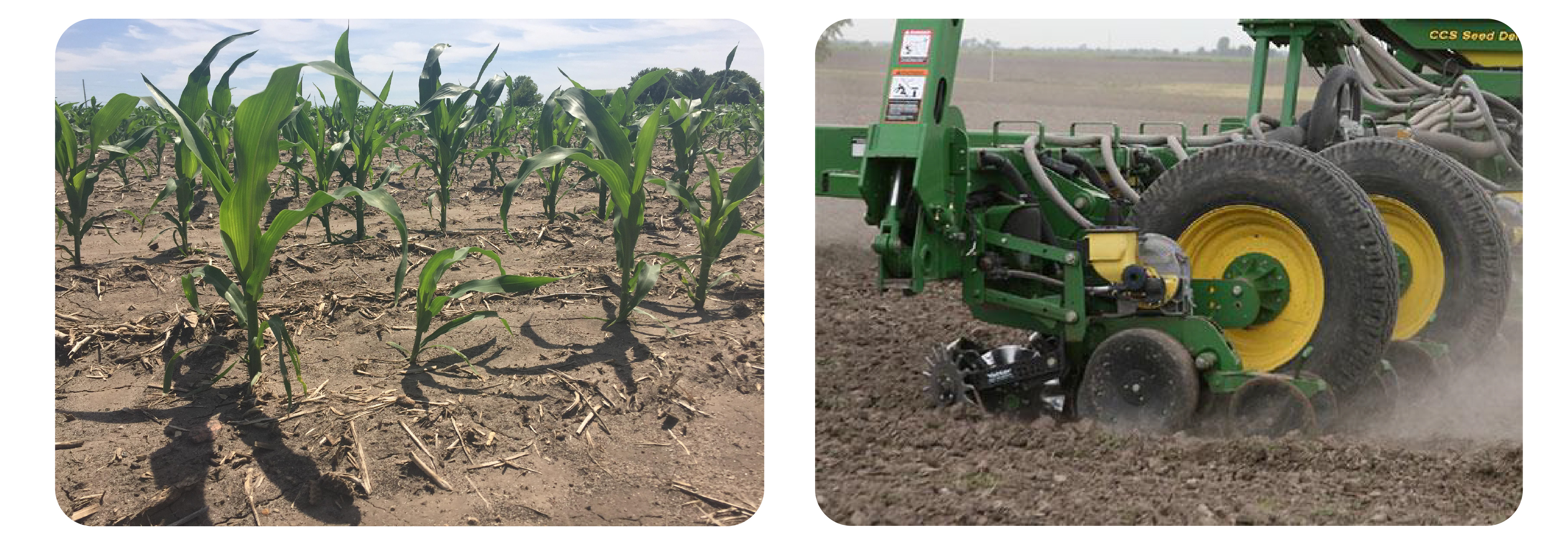
While soybeans can tolerate some variability in plant spacing, corn requires near-perfect uniformity. Its yield depends less on planting date and more on even emergence.
Ideally, all corn plants should emerge within a 24–48 hour window. A plant that emerges even two leaves behind its neighbours will likely produce a very small ear—or none at all—effectively acting as a weed that competes for resources
Economic Analysis: Where’s the Profit?
It’s important to evaluate which crop is the most profitable for your operation and prioritize that one.
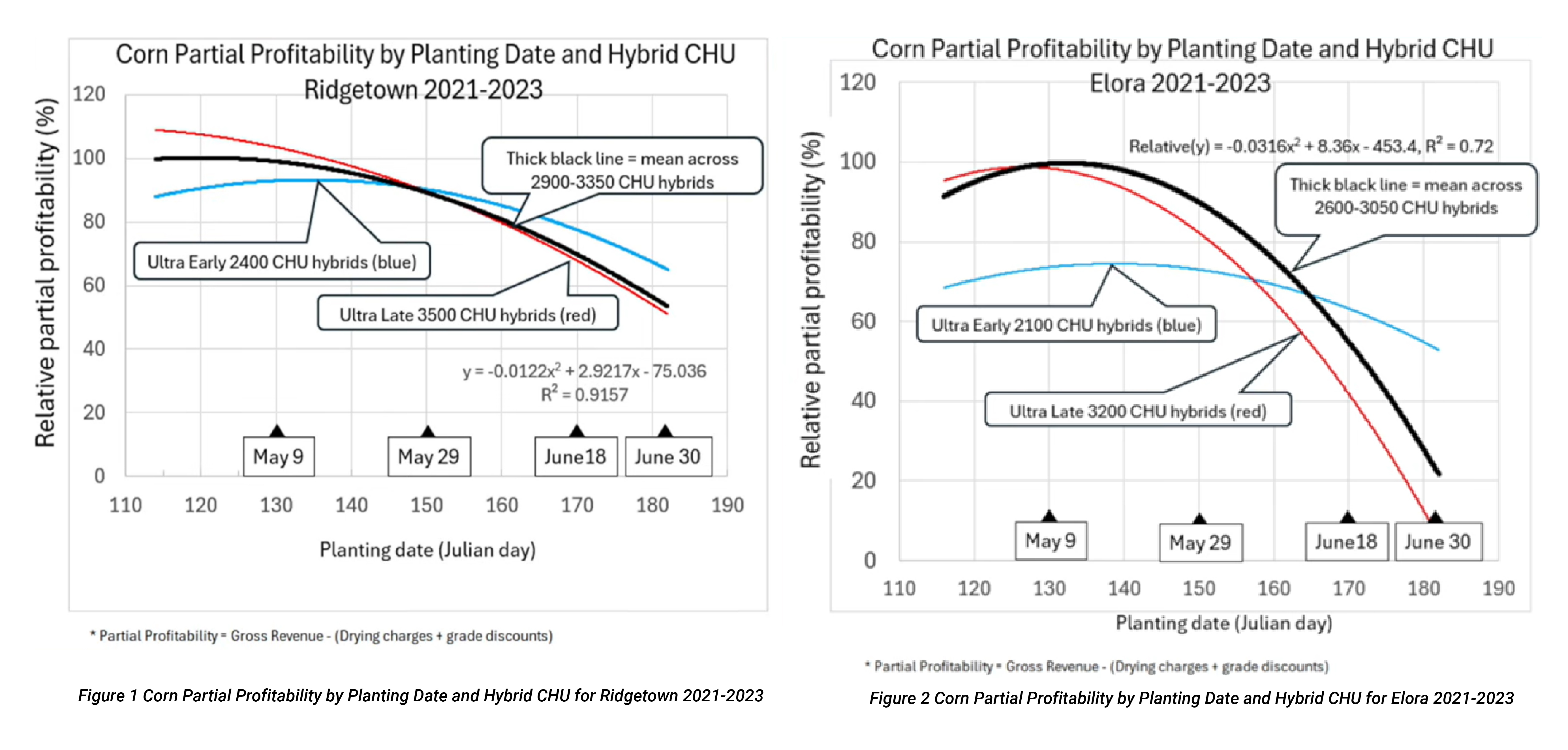
Ben Rosser, OMAFA shared three profitability curves for Ridgetown, Elora and Winchester on the Real Ag Corn School in April 2026. https://www.realagriculture.com/corn-school/dont-rush-to-plant-corn-its-early-corn-school/#:~:text=The%20data%20delivers%20a%20clear,around%20May%2015%20to%2020. ) The curves for Ridgetown, Elora and Winchester can be seen in figures 1, 2 and 3 below respectively.
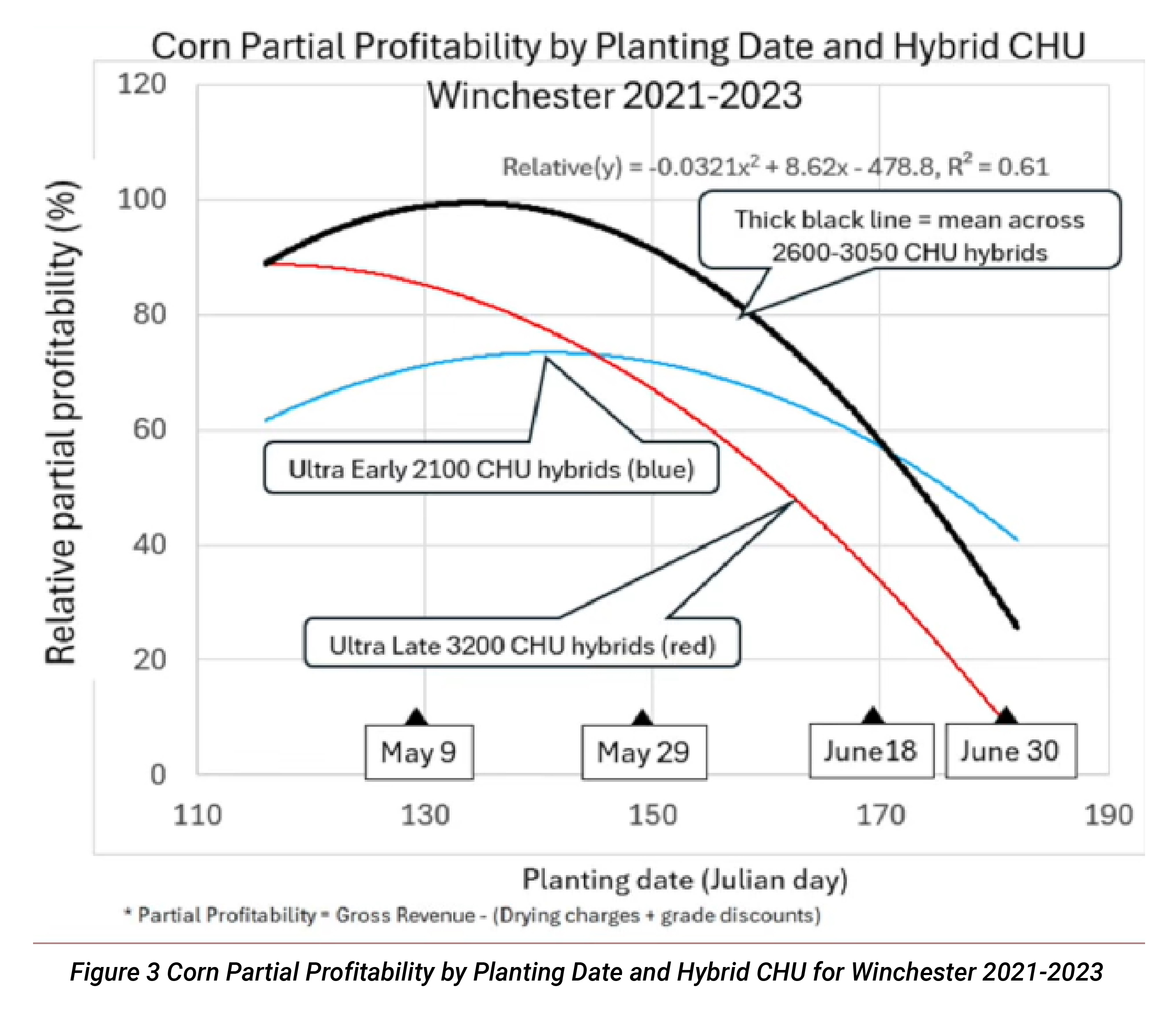 |
Analyzing yield curves based on planting dates shows an interesting crossover around mid-May:
- Before May 15: The potential gain from early-planted soybeans is often higher, percentage-wise, than that of corn.
- After May 20: The priority shifts radically back to corn. Corn planted in June sees its yield potential drop by more than 1% per day, on top of massively increasing drying costs in the fall.
Conclusion
Every grower understands their own fields best and can adapt accordingly. If you have two planters, the ideal strategy is to plant both crops as soon as conditions allow.
If you only have one planter, current research suggests reconsidering tradition and starting with soybeans. This approach can increase soybean yield potential without sacrificing corn performance, as corn will benefit from slightly warmer soils that promote faster, more uniform emergence.