Planting into Warm Soils: Setting Corn and Soybeans Up for Success in Ontario
Spring planting in Ontario is always a balancing act between calendar timing and field conditions. While getting crops in early can offer yield advantages, one factor often underestimated in the rush to plant is soil temperature. Yet, it plays a critical role in determining how successfully a crop establishes—and ultimately performs throughout the season.
Why Soil Temperature Matters
Corn and soybean seeds respond to soil temperature, not air temperature. When soils are cold, germination slows, emergence becomes uneven, and seedling vigour declines. This creates a ripple effect, increasing vulnerability to disease, insects, and early-season stress.
Research shows that soil temperatures below 10°C significantly increase risk, while warmer, stable soils promote faster and more uniform emergence. Fields with heavier soils or high residue—such as no-till systems—tend to warm more slowly, making them higher risk in early planting situation.
Figure 1: Flag Test monitoring emergence over a 72 hour window. Day 1 of emergence marked by green flags, Day 2 blue flags, Day 3 yellow flags, Day 4 red
The First 48 Hours: A Critical Window
The most sensitive period for both corn and soybeans occurs immediately after planting. During the first 24–48 hours, seeds absorb water in a process called imbibition. If that water is cold, seeds can suffer from imbibitional chilling injury.
This type of stress can cause permanent damage before the plant even emerges, especially if:
- Soil temperatures are below 10°C
- Cold rain follows planting
- Temperatures drop sharply after planting
Once injury occurs, the impact is often irreversible.
What Cold Stress Looks Like
Cold soil conditions can lead to a range of visible issues in the field as seen in the pictures below:
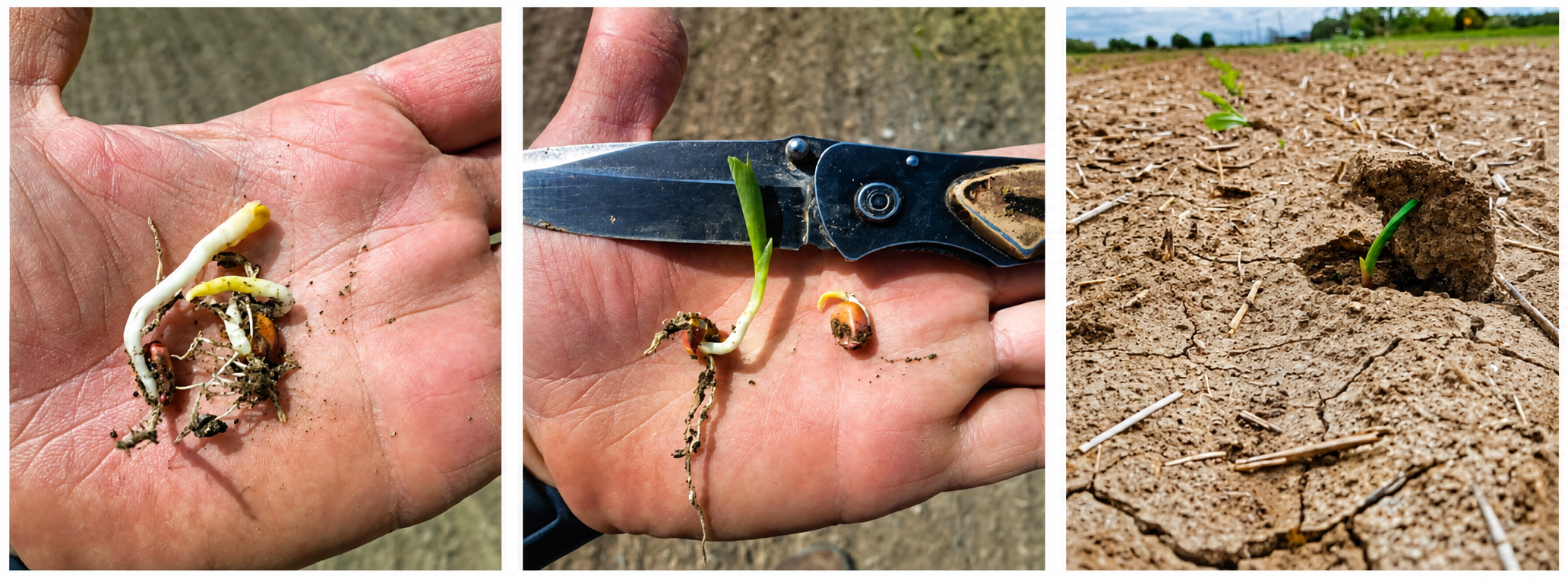
In corn, symptoms may include corkscrewed mesocotyls, leafing out underground, stalled growth, or seeds that fail to germinate altogether. In soybeans, damage often appears as split or discoloured cotyledons, poor emergence, and increased susceptibility to disease.
Even when plants survive, reduced vigour early on can limit yield potential for the entire season.
Compounding Risks of Cold Soils Planting into cold soils doesn’t just delay emergence—it increases other risks that can impact stand establishment. Slow germination exposes seeds to soil-borne pathogens like Pythium and Fusarium for a longer period, increasing the likelihood of infection. At the same time, insects such as seedcorn maggot and wireworms have more opportunity to feed on seeds and seedlings. The result is often uneven emergence, reduced plant populations, and inconsistent stands. While some plants can compensate, large gaps and variability within the row typically lead to lost yield that cannot be fully recovered. Timing Matters: Temperature and Trend While 10°C is often considered the minimum threshold for planting, the trend in soil temperature is just as important as the number itself. | 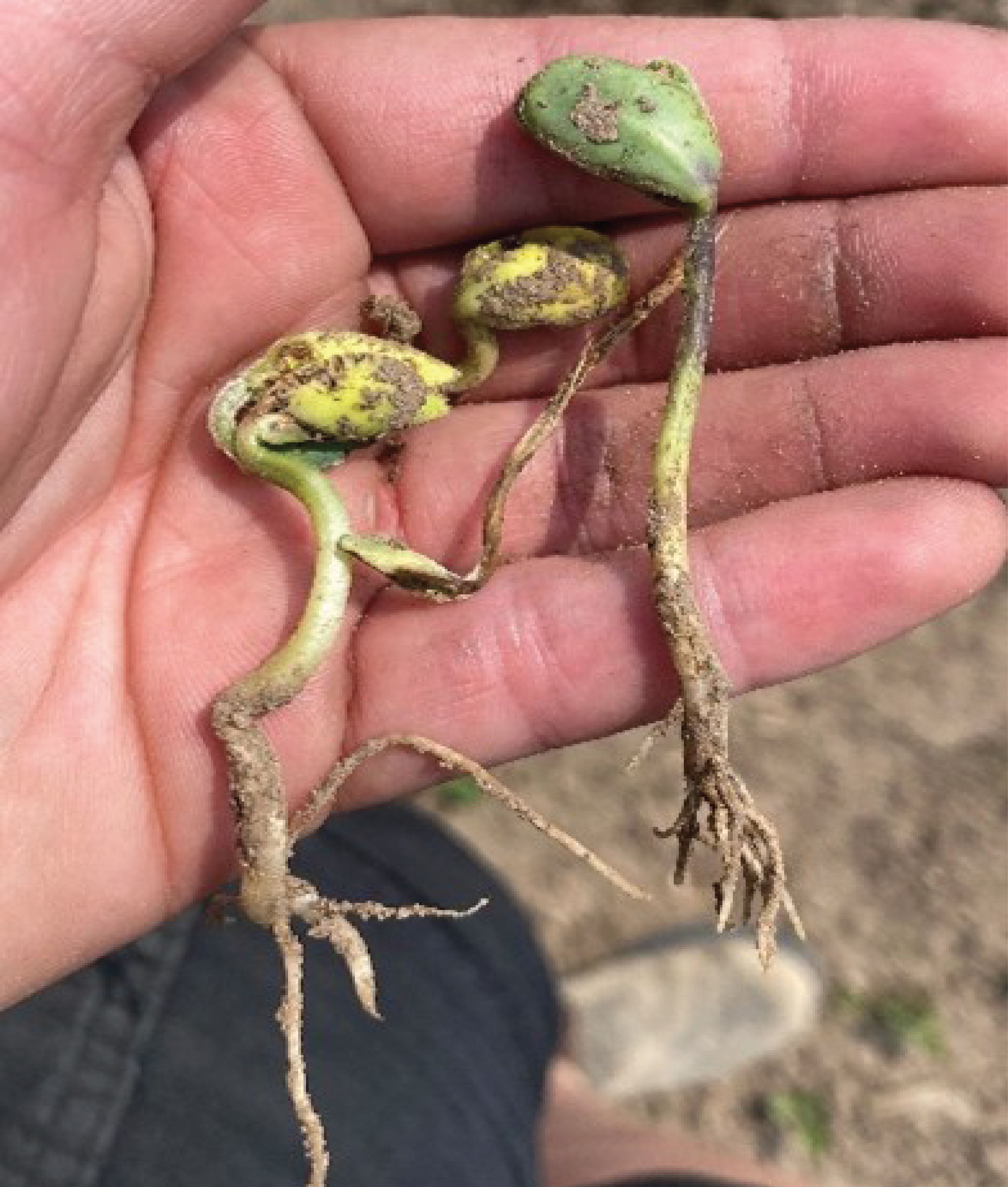 |
Lower-risk conditions include soils at or above 10°C with a warming trend and a stable forecast. Higher-risk scenarios occur when soils are marginal and temperatures are expected to decline, particularly if cold rain or frost follows planting.
Planting into a cooling trend increases the likelihood of chilling injury, delayed emergence, and stand issues—even if conditions initially appear acceptable.
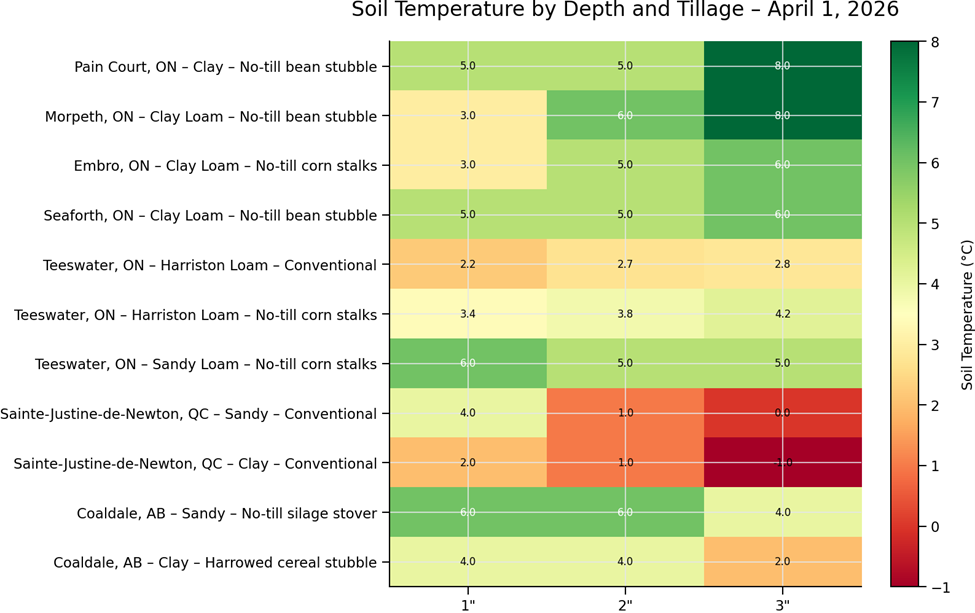
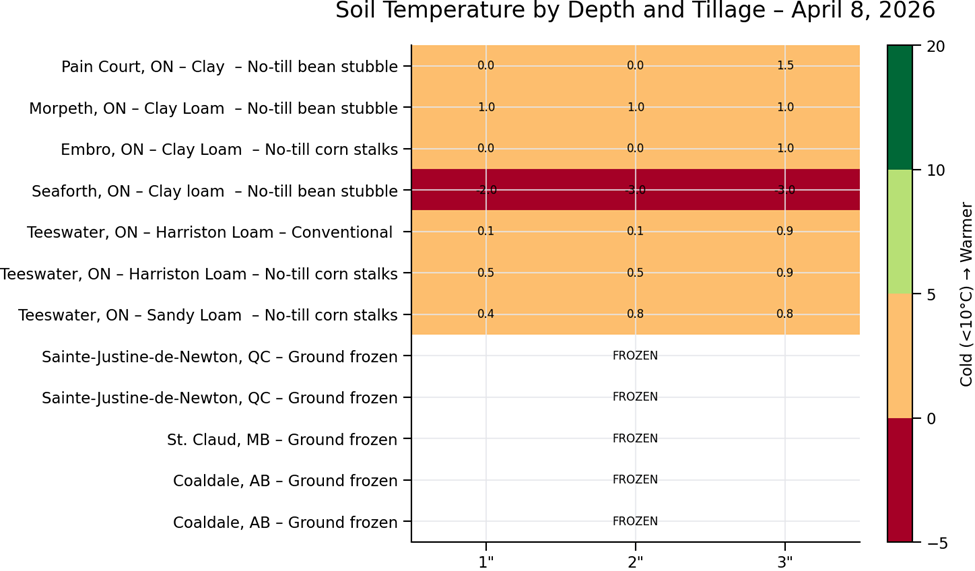
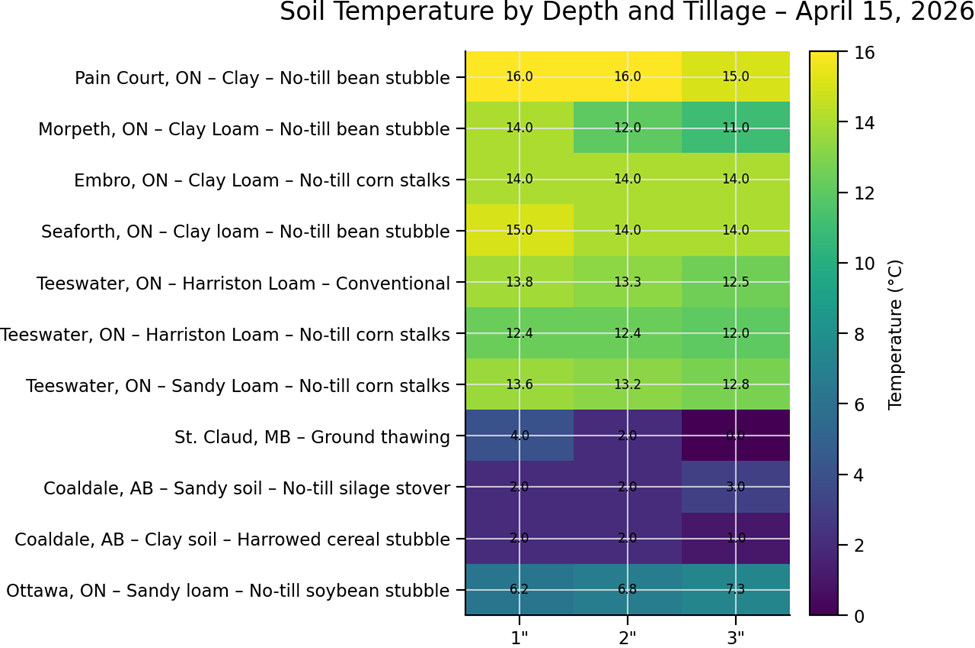
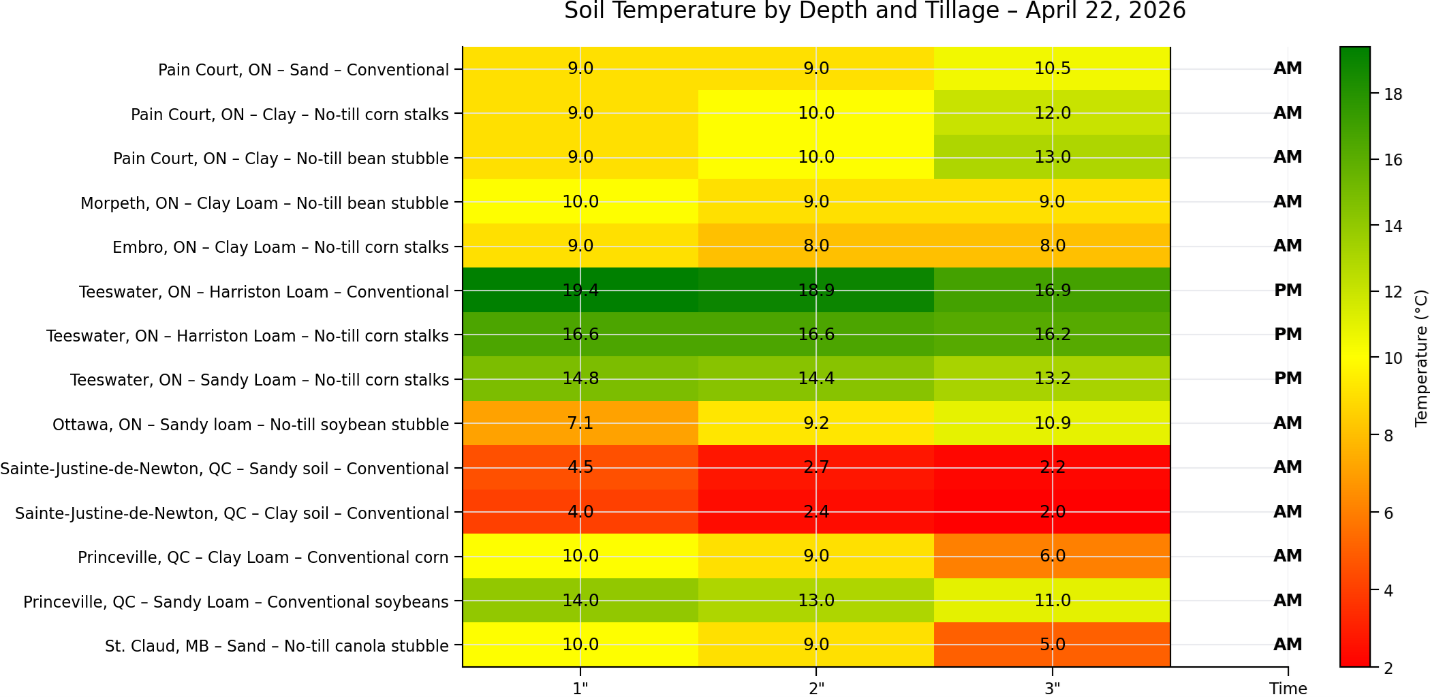
In 2026, Pride Seed agronomists across Canada started tracking soil temperatures at 1” soil depth, 2” and 3” depth across a variety of soil types and management scenarios. Below is a 4 week look at how temperatures changed across the field:
Week 1:
Week 2:
Week 3:
Week 4:
Not All Fields Warm Up the Same
Yield variability plays a major role in planting decisions. Soil type, residue cover, drainage, and tillage practices all influence how quickly soils warm in the spring. We see this clearly in the data of the various locations where we monitored soil temperature.
Heavier clay soils retain more moisture and require more energy to warm, often delaying planting opportunities. In contrast, lighter-textured soils drain more easily and warm more quickly.
Residue also impacts soil temperature by reflecting sunlight and insulating the soil surface, slowing warming. Similarly, no-till systems tend to stay cooler longer compared to conventionally tilled fields, which expose darker soil and allow it to absorb more heat.
Understanding these differences can help prioritize fields and reduce early-season risk.
Practical Takeaways for Growers
Successful planting decisions come down to focusing on conditions rather than the calendar.
Measuring soil temperature at planting depth—around 1.5 to 2 inches—provides the most accurate assessment. It’s also important to monitor variability across fields rather than relying on a single reading.
Equally critical is watching the forecast in the 48 hours after planting. Planting ahead of a cold rain or temperature drop can quickly turn a good seedbed into a high-risk situation.
Prioritizing well-drained, lighter-textured fields with lower residue can improve the chances of achieving even emergence and strong early growth.
The Bottom Line
Early planting can offer strong yield potential—but only when conditions are right. Uniform emergence is one of the biggest drivers of yield, and soil temperature plays a central role in achieving it.
In many cases, waiting a few extra days for soils to warm and stabilize is one of the highest-return decisions a grower can make. The key question isn’t just whether soils are fit—but whether they’re warm enough, and staying that way.
We hope you found this article helpful. Stay connected for more agronomic insights and field updates from PRIDE Seeds.