Correct Planting Depth is Crucial
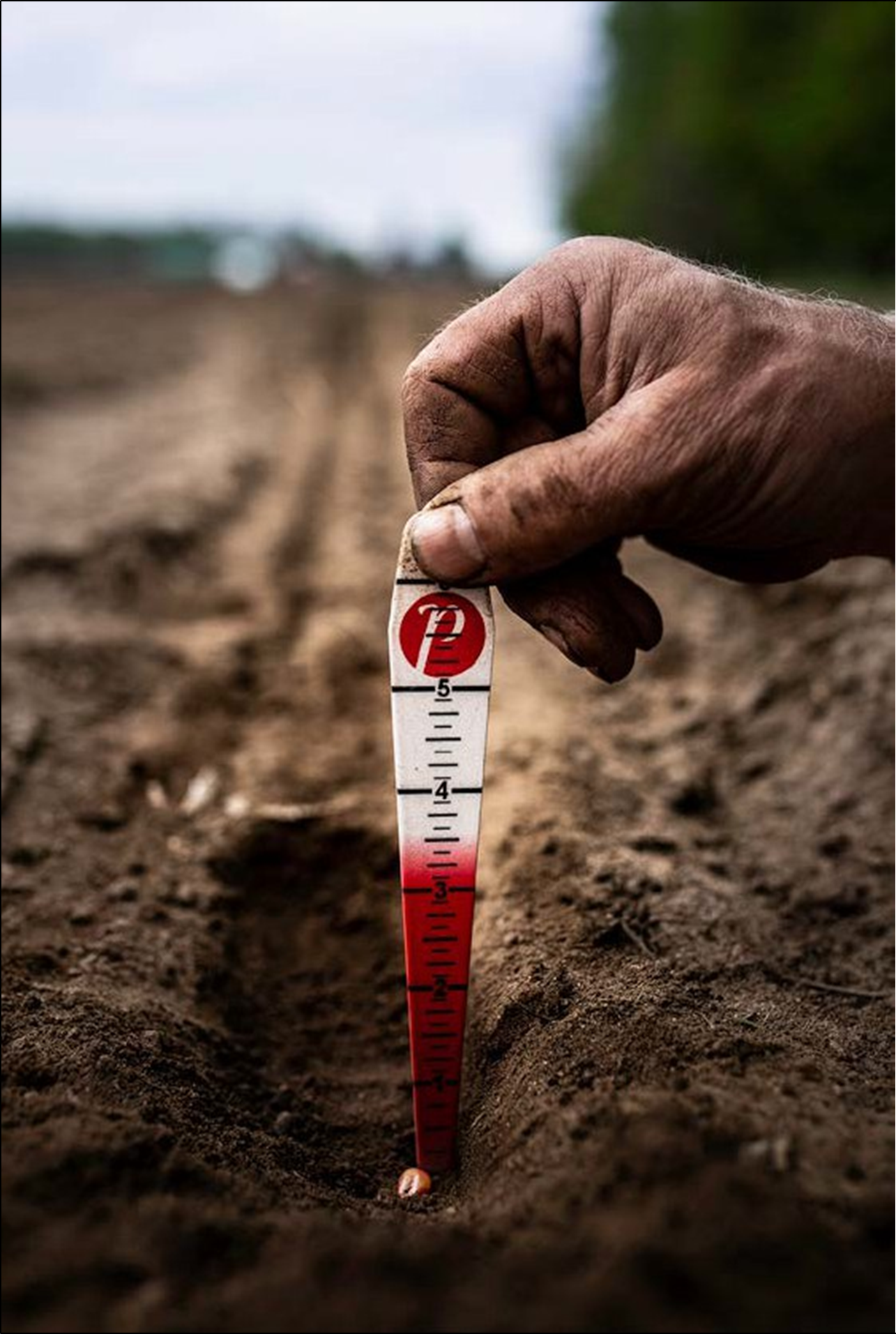
Ideal planting depth is 1.5 – 2.0 inches into 0.5” of soil moisture.
Background: Corn Root Structure
Before discussing the implications of planting too shallow or deep, it is important to understand the development and structure of corn roots systems.
Once corn seed is planted, the seed imbibes water and the water-dissolved nutrients in the embryo. These nutrients participate in a series of biochemical reactions that result in germination.
The first structure to emerge from the seed is the radical root. After emergence of the radical, the coleoptile (not a root structure) emerges, followed by the lateral seminal roots. The radical and lateral seminal roots make up the seminal root system.
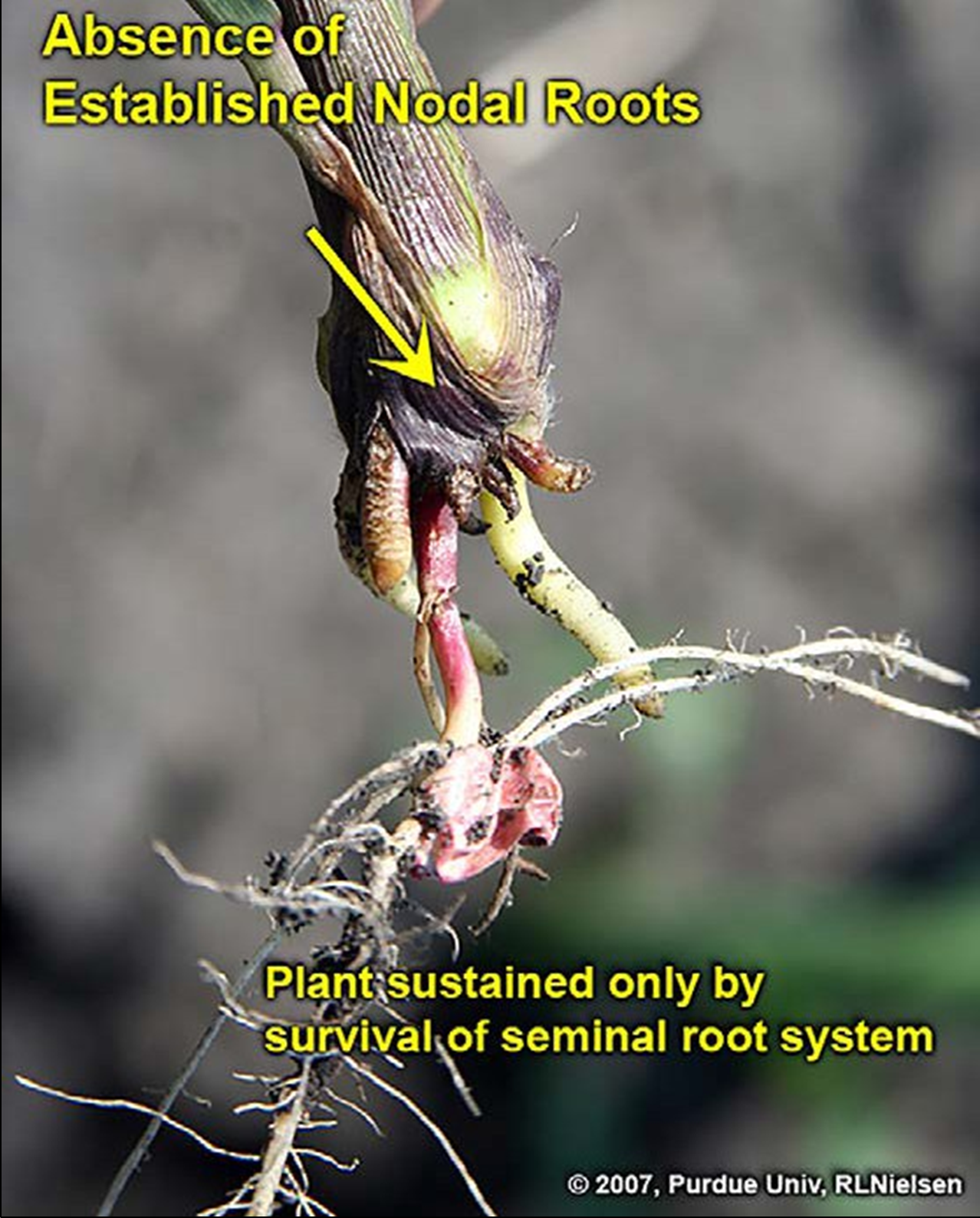
The nodal root system develops at nodes right above the mesocotyl of the stem (~ 0.5 – 0.75” below the soil surface). The first set of nodal roots develop at the lowermost node and continue to develop at their respective nodes progressing toward the soil surface.
Nodal root set development is aligned with leaf collar development - if the seedling has two sets of nodal roots it is at/near the V2 leaf stage. As the nodal root system develops, the seminal root system plays a less crucial role in water uptake. Nodal roots are essential for structural support and the majority of nutrient and water uptake.
TOO SHALLOW TOO DEEP
• Poor development of nodal root system • Exposure to cold soil temperatures
• Early season lodging • Delayed/ no emergence
• Poor plant health mid-late season • Leafing out underground
Summary Table: The effects of planting too deep and too shallow
Ideal Planting Depth
So why is 1.5 to 2.0 inches into half an inch of soil moisture the ideal planting depth for corn?
At this depth, good seed-to-soil contact can be achieved. Good seed-to-soil contact is vital for water uptake by the seed and the germination process.
The seed needs to be placed into soil moisture for water uptake to occur. The soil moisture at planting depth should be even throughout the seedbed to promote uniform imbibition and germination leading to even emergence.
In addition to this, the 2'' depth allows for development of a strong nodal root system, essential for rapid plant growth and development.
Consequences of planting too shallow or too deep
It is important to remember that planting too shallow is worse than planting too deep. During the season, it is more common to identify problems in corn fields planted too shallow.
Planting too shallow can result in poor development of the nodal root system, resulting in reduced water, nutrient uptake and plant lodging.
underground. Delayed plant emergence is due to the greater time and energy required by the seedling to emerge from deeper depths.
At deeper depths, the soil can be cooler, resulting in a delay in germination and increased exposure to soil disease and insect damage. Corn is sensitive to cold soils and requires soils temperatures at or above 10ºC for germination.
It is essential to check soil temperature at the proper planting depth before getting the planter rolling. Delayed emergence can result in delayed flowering and silking, maturity and harvest.
Taking the time to set planting depth and checking depth from field to field can lead to fewer potential problems to cope with during the growing season.